
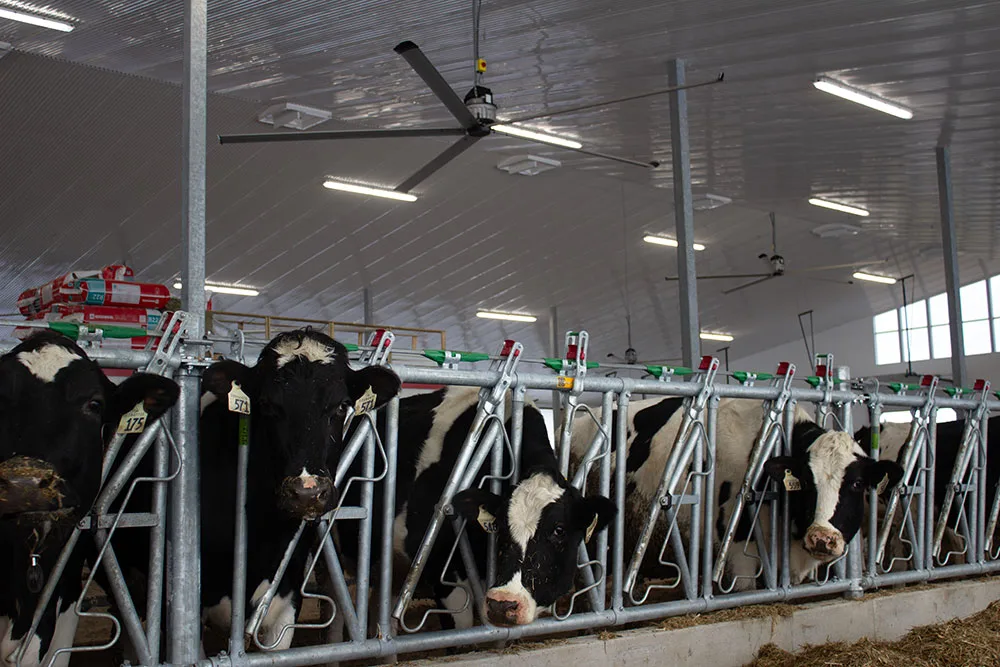
The HVAC systems are the heavy lifters in huge industrial and commercial buildings. They keep large areas cool during summer, but struggle with escalating heat burdens of machinery, and wrestle with seasonal temperature changes throughout the year. However, a high-tech HVAC system cannot cope without appropriate air circulation. Cold air becomes trapped at the floor. Hot air ascends and stays unutilized at the ceiling. Hot spots, imbalanced temperatures and wastage of energy soon begin to accumulate.
That is why facility managers today are thinking about additional possibilities for climate control, but not by extending the HVAC capacity, but by incorporating industrial ceiling fans, specifically High-Volume, Low-Speed (HVLS) fans, into the conditioning scheme.
- An HVAC system cools or heats the air.
- The movement of such air becomes efficient due to an HVLS fan.
Together? They develop an efficient and affordable climate solution that is intended to generate long-term savings and annual ROI.
The Missing Link in HVAC Performance: Air Movement
HVAC units are not enough to ensure even comfort in large spaces. Why?
- Cold air is likely to be stagnant and sink.
- Heat is trapped at an elevation above the working height.
- The ceilings are high, which adds to the energy demand.
- Heat load is always affected by machinery, people and inventory.
- Heaters and air conditioners usually operate at higher capacities than required.
The basic problem that is addressed by industrial ceiling fans is that air does not flow uniformly in large structures. HVLS fans rectify this imbalance by producing a massive, slow-moving air that diffuses conditioned air from top to bottom and wall-to-wall.
A more intelligent, more efficient system is now achieved, one that consumes less energy and is much more comfortable.
Cooling Savings: The Summer Advantage
A significant portion of the energy bills in large facilities is influenced by the cooling costs in summer. Lack of proper circulation leads to overworking of HVAC units in an attempt to deliver set temperatures. An HVLS fan intervenes in improving cooling efficiency in three primary aspects:
1. Enhanced Air Mixing
The cool air supplied by an HVLS fan is spread uniformly around the facility. This ensures comfortable temperatures throughout the workspace, eliminating uneven hot or cold air pockets.
2. Perceived Cooling Effect
The evaporative cooling created by HVLS airflow leaves a cooling effect on the skin. Employees experience temperatures of up to 6 to 10 degrees Celsius cooler despite the absence of a reduction in thermostat settings.
This allows facilities to:
Raise AC setpoints
- Maintain comfort
- Reduce compressor cycling
The average cost savings in cooling large facilities with a typical integration would be 20-30 percent, and the savings may be greater in large warehouses, logistics centers, and manufacturing plants.
3. Reduced Load on HVAC Equipment
Lower demand equals:
- Less wear on compressors
- Fewer service calls
- Prolonged life span of equipment
All of these make operations more reliable and lower long-term maintenance expenses.
Heating Savings: The Winter Payoff Most Facilities Overlook
Thermal stratification is a silent energy waste problem that occurs in industrial buildings during winter.
Warm air ascends and gathers around the ceiling, and the workers and products stay in colder air in the lower region. The heaters are then left to run longer to compensate.
HVLS fans solve this through destratification, that is, by pushing a smooth movement of warm air downwards from the ceiling into the working area.
How Destratification Saves Money
- Reduces heater runtime
- Equalizes temperature differences
- Stops heat loss on the uppermost layers
- Establishes a conducive environment
A number of facilities achieve 15-25 percent in heating energy savings, and some cold-climate buildings achieve higher savings.
Added Winter Benefits
- Reduced condensation
- Less moisture damage
- Improved facility safety
- High-level comfort on the ground level
HVLS fans use wasted warm air to create usable heat, making the most of every unit of energy generated by the HVAC systems.
Full-System Integration: Getting the Best ROI
Installing HVLS fans does not mean a replacement for HVAC. In fact, they support HVACs to perform better. Thinking of HVLS fan installation strategically would mean a high ROI, which keeps multiplying with time.
1. Lower Upfront HVAC Requirements
When you work to improve the circulation of air in your facility, you will be able to:
- Consider installing smaller HVAC systems
- Lower ducting complexity
- Avoid unnecessary expansions of equipment
HVLS fans help you achieve far greater efficiency with minimal hassle.
2. Continuous Operational Savings
With HVAC systems working smartly, facilities save every month; adding them up indicates a long-term payback.
3. Reduced Maintenance Expenses
A balanced airflow keeps the equipment running in a bearable temperature range. With these facilities notices:
- A reduced stress on the machines
- Avoids system overload
- Lowers instances of emergency repairs
4. Productivity & Comfort ROI
Achieving comfortable temperature in industrial environments goes far beyond comfort; it is also about performance:
- Lowered heat stress
- Allowing better focus at work
- Fewer errors due to fatigue
- Improved productivity and quality
This comfort brought by industrial ceiling fans comes with quantifiable value for the business.
5. Long Life, Low Maintenance Fans
The lifespan of an HVLS fan extends beyond 10 years, with comparably fewer maintenance services required. With the efficiency and longevity of these industrial fans, you achieve a higher ROI than the initial investment made.
Why Consider This Integration Now
Energy prices are rising. The expectations for sustainability are rising. Facilities are being pressured to work lean, clean, and work more efficiently.
One of the most basic, least risky, and impactful upgrades that you can add to your HVAC strategy is the addition of HVLS fans. It will enhance comfort, reduce energy consumption, improve HVAC performance, and provide year-round value.
And when compared to a significant machinery upgrade, installation of HVLS is fast, clean and least disruptive.
The Bottom Line: Smart Air Movement = Smart Energy Management
Even an effective HVAC system has its limitations. And without adequate air circulation, you are spending more money and getting less comfort and efficiency.
HVLS fans turn your HVAC strategy into an ecosystem rather than a collection of isolated elements.
- Summer: Saving on cooling, with better comfort.
- Winter: Less heat expenses, de-stratified warm air.
- Year-Round: Greater profitability, improved working conditions.
Industrial ceiling fans are your next step toward a climate strategy that is perfectly optimized, both economically and operationally.
FAQs
- How do industrial ceiling fans work with the existing HVAC systems?
HVLS fans are installed to support HVAC systems, guaranteeing even distribution of hot and cool air in large facilities. This simple function improves efficiency, eliminates hot and cold air pockets, and lowers the load put on HVAC systems. The results are less energy consumption and more consistent temperature regulation. - Is it true that HVLS fans are able to lower the cooling expenses during summer?
Yes. HVLS fans improve the mixing of air and increase the evaporative cooling at the floor level, enabling a facility to increase the setpoints of thermostats without compromising comfort. This saves AC compressor run times and usually provides 20-30 percent cooling cost savings when running operations during summer. - What are the savings made with HVLS fans?
During winter, the HVLS fans de-stratify warm air which is trapped along the ceiling and force it to move back into the occupied space. This minimizes the heater operating time, avoids heat loss, and may save one 15 to 25 percent of heating costs, depending on the height of a building and the local climate. - Will I face a delay in operations in my facility when installing HVLS fans?
HVLS fans are fast and least invasive to install. Facilities can operate as usual. When installed, the fans will blend with the current HVAC systems, require no user training, and begin providing comfort and energy savings as soon as possible. - Are HVLS fans more comfortable and productive for the workers?
Absolutely. HVLS fans prevent heat stress, fatigue, and discomfort by removing stagnant areas and ensuring airflow, which is evenly distributed. Employees remain cooler and more active, and this has a direct impact on accuracy, safety, and overall output of any industrial and commercial setting. - What ROI will I have by integrating fans with HVAC?
The payback period is usually 12 to 24 months since HVLS fans usually consume less energy and lower the load on the HVAC systems, require less maintenance, and improve worker performance. Long life and low operating cost make them one of the highest-paying climate investments one can make.